
Avoyelles Parish Criminal Docket Searches
Every state-level Avoyelles criminal case lives in the 12th Judicial District Court. That is the trial court. A city-court ticket file, an appeal, or a federal case is a different record entirely. For docket search access, the Avoyelles Parish Clerk of Court points users to Cott eSearch. The public landing page asks for a username or email and a password. Registration and password-recovery options sit alongside. Don't assume an open search form. Nothing on that screen promises a name, case number, date, or criminal-case filter for visitors. The account opens one Clerk access path. It is not a combined Avoyelles city-court, appellate, or federal lookup.
Gather details before you log in. Have the exact defendant name and a docket number if you know one. Bring an approximate filing or event date, the offense description, and the assigned division if a notice shows it. What happens after login stays unknown from the public side. The Cott landing screen does not disclose its query fields, result layout, document-image availability, pagination, export tools, or live fee terms. Two more official doors exist. The Louisiana Clerks' Remote Access Authority and eClerks LA both start with an account too. Neither public page proves a complete, unrestricted statewide Avoyelles criminal index. Compare any result against the Avoyelles court. Check the division named in the record itself.
- Confirm that the case belongs in the Avoyelles 12th Judicial District Court rather than Marksville City Court, Bunkie City Court, another parish, or federal court.
- Use the Clerk-linked Avoyelles Cott eSearch account path if its current terms meet the need, then retain the case number and division shown by the result.
- Compare the defendant name, date, charge information, and division before treating a result as the correct Avoyelles case.
- Read the Avoyelles docket chronology for settings, motions, the minute entry, disposition, and sentence rather than relying on a single charge line.
- If an Avoyelles entry, image, or certified copy is unavailable, ask the Clerk for the approved access path and describe the record precisely.
Avoyelles Criminal Docket Portal Limits
When a record won't surface after login, go to the source. The Avoyelles Parish Clerk of Court sits at 312 North Main Street, Marksville, Louisiana 71351. The office answers the phone at (318) 253-7523. Give the staff a case number or full name. Add a date range and the division. Say exactly what you want. Options include a docket chronology, a minute entry, an ordinary copy, a certified copy, or a document image. The Clerk can explain records access and current fees. Legal advice is off the table, though. Questions about a plea, a motion, or case strategy need a lawyer.
A blank portal result proves nothing. The name may be spelled differently. The case may sit in another court. An older Avoyelles Parish item may never have been indexed online. The account path may have limited scope, or the record may simply be restricted. One more gap deserves mention. A docket entry does not guarantee an attached pleading, transcript, exhibit, police report, or evidence file. Treat the docket result and the full-document request as two separate tasks in any Avoyelles Parish case lookup.
Criminal Dockets: What They Show
Think of an Avoyelles criminal docket as a dated timeline. It opens with the Avoyelles Clerk's case identifier and caption. From there it can show the division or judge. It can also show charge activity, court settings, motions, brief event descriptions, and later disposition information. Copy any case number exactly as written. Keep the punctuation and year format. No standard public Avoyelles criminal number pattern has been published. A small change in formatting can break a search. And remember the screen may show only an index or event line. It may not show the complete filing behind it.
| Case Number | The Clerk's primary Avoyelles locator. Record it exactly rather than inventing a format such as YYYY-CR-#####. |
|---|---|
| Division or Judge | The assigned 12th JDC division, an essential match point for an Avoyelles criminal setting. |
| Charge Activity | Avoyelles filing, amendment, or dismissal information. A charge entry alone does not state a final result. |
| Minute Entries and Settings | Dated Avoyelles proceedings, motions or status events, arraignments, pretrials, trials, and other court events. |
| Disposition and Sentence | Later Avoyelles entries that must be read with the event history to understand whether a case ended and what the court recorded. |
Expect terms like bill of information, indictment, arraignment, motion, and minute entry. A minute entry is the official summary of an event or ruling. It is not necessarily a transcript. A filed charge is not a finding of guilt. Likewise, an absent later entry proves nothing. It is no safe basis for calling an Avoyelles case closed.
Avoyelles Criminal Minute Entries and Charge Codes
Louisiana law lists what a covered criminal docket should show online. Under La. R.S. 13:5992, the public minute-entry categories are broad. They run from arrest or summons through custody, bail, charge filings, amendments, dismissals, motions, trials, guilt findings, and sentencing. Each entry also names the date. The judge, the prosecutor, and the defendant appear too. That inventory tells you which Avoyelles event categories to ask the clerk for. It stops short of promising every supporting document or image.
The official Louisiana charge-code and costs system plays a different role. That page maps statute-linked charge codes to standard costs. Treat it as a reference tool. It is not an Avoyelles docket, a case outcome record, or a place to pay.
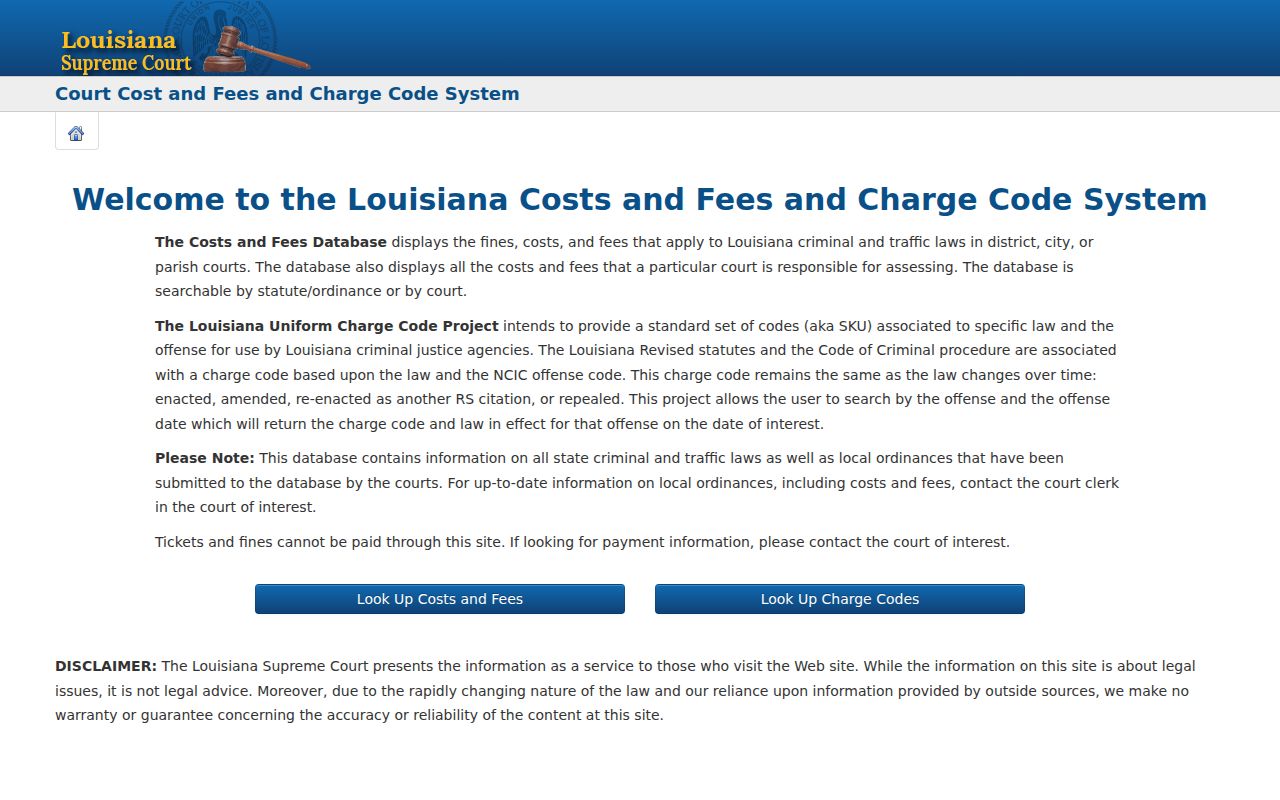
A charge-code lookup serves one purpose. It helps you tell a statutory reference apart from the Avoyelles docket's trail of court events. For what actually happened in a specific case, the Avoyelles Clerk still governs. The assigned court record governs too.
One carve-out matters for drivers. Traffic violations are expressly excluded from the statute's criminal minute-entry mandate. That exclusion does not decide whether every traffic record is public. It only means an Avoyelles traffic citation belongs with its citation instructions. It follows the normal traffic process, not any promise that the criminal-transparency feed will carry it.
Criminal Case Stages on the Docket
A criminal docket at the 12th JDC tells a story in dates. An Avoyelles case file usually opens with the charge. It then moves through arraignment, motions or status settings, a pretrial date, trial activity, and finally a sentence or disposition. Read each line as one dated Avoyelles event. Nothing more, nothing less.
One caution matters here. A bare arrest, summons, or charge line is not the outcome. Before a hearing, compare the next setting on the docket with the most recent notice you received. Treat a disposition and its sentence as a pair rather than separate answers about an Avoyelles criminal case.
Docket flow: Arrest or Summons › Charge Filed › Arraignment › Pretrial or Motion Settings › Plea or Trial › Disposition › Sentencing
Some Avoyelles files begin with a bill of information; others start with an indictment. Grand-jury work stays secret, so a short docket entry never replaces the full record. It is only a summary. Before you trace a case's chronology, a name-or-number lookup helps you land on the right file. The Avoyelles docket search page handles that step.
Avoyelles Criminal Docket Divisions
The 12th Judicial District Court splits its Avoyelles criminal work between Division A and Division B. Local rules assign cases by alternating calendar weeks tied to the offense date. Whichever division draws the case keeps it. The result is practical: two Avoyelles criminal cases filed days apart can sit with different judges. When you call the Clerk about a setting, a division number works far better than a broad parish label.
Where does this structure come from? The Louisiana Judiciary lists both district-court divisions. The local rules spell out the allotment process for Avoyelles. Those same rules let a party request a pretrial or status conference by formal motion or letter to the assigned division. That opens a route for asking about a specific Avoyelles case. It does not promise a slot on any particular day or time. The notice and current court instructions control.
Avoyelles Parish Criminal Docket Courts
For Avoyelles criminal matters, the 12th JDC is the general-jurisdiction state trial court. It handles the cases its two-division rules describe. Two lower local courts sit alongside it: Marksville City Court and Bunkie City Court. A city ordinance violation, a city-police ticket, or a limited local misdemeanor does not land in the 12th JDC criminal docket automatically. To find which Avoyelles clerk holds a record, check the issuing agency. Check the court named on the notice too. Then look at the case number and the filing date.
Appeals travel a different road. An Avoyelles appeal generally moves to the Third Circuit Court of Appeal. Its docket is not the full 12th JDC case file. Federal charges are elsewhere entirely. They sit in the Western District of Louisiana's PACER and CM/ECF system rather than the Avoyelles Parish Clerk. Picking the right Avoyelles court first saves you a dead-end name search in the wrong record system.
Avoyelles Criminal Docket Filing Context
Scale tells you something. But only a little. The Louisiana Supreme Court's 2024 annual report counts 2,393 criminal filings for the Avoyelles 12th Judicial District Court that year. It also records two criminal jury trials. Those figures describe recorded Avoyelles criminal filings and nothing else. They reveal nothing about unique people, final outcomes, pending backlog, or the date of any hearing. A single Avoyelles filing count can even bundle several events or matters tied to one person or case.
Treat the numbers as background. They show why exact identifiers matter in an Avoyelles docket search. Filing counts are not Avoyelles convictions, acquittals, or a claim that only two cases reached a result.
Access Rules for Criminal Dockets
Louisiana's public-record framework lets you inspect and copy public records, within exceptions. Still, it bends to any statute or court order that seals an Avoyelles record. When you ask the Clerk, name the exact Avoyelles item you need. Be specific. A docket chronology, a certified copy, an underlying pleading, and a transcript are different things. The Clerk can explain the lawful access route. It can name any copy or certification charge. It can also say whether a restriction blocks release.
Key rules for Avoyelles criminal access:
La. R.S. 44:31 recognizes an adult's right to inspect or copy public records, subject to exceptions and the custodian's duties.
La. C.Cr.P. art. 973 makes an expunged record confidential and no longer public except in limited authorized circumstances.
La. R.S. 13:5992 specifies covered criminal minute-entry information available through LCRAA while excluding traffic violations.
The official post-expungement confidentiality statute makes the point plainly. An expunged record stays confidential. Searching harder is not an option.
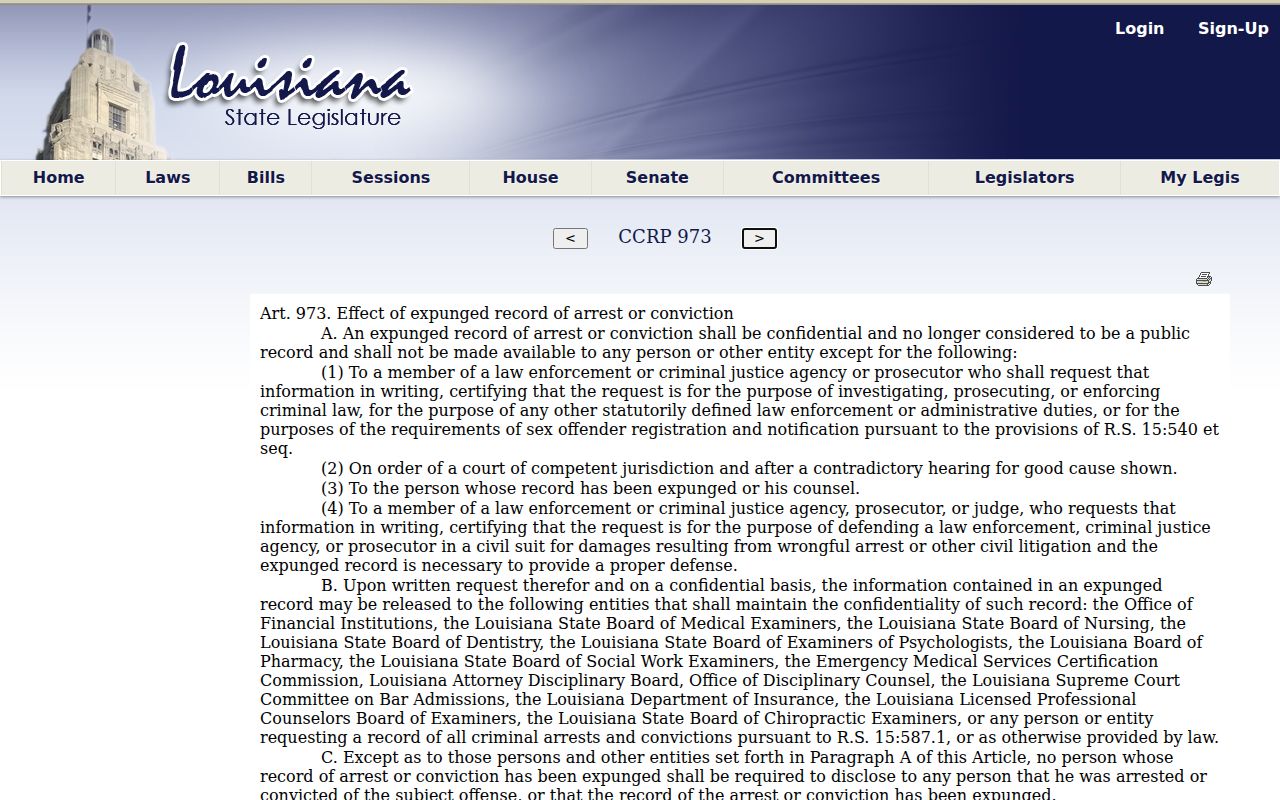
What if an Avoyelles search comes back empty? Check the court, the spelling, the date range, account limitations, and any lawful restriction first. Only then draw a conclusion about the case.
Avoyelles Criminal Docket Restricted Records
Adult and juvenile access run on different tracks. Juvenile records sit behind a confidentiality regime. So an Avoyelles juvenile matter is never an ordinary public adult docket. Grand-jury proceedings are secret too. A court can seal a document image while leaving only a sliver of docket text visible. Protected identifiers may also be redacted from a record that is otherwise released. The official Children's Code art. 412 spells out the juvenile-record confidentiality rules.
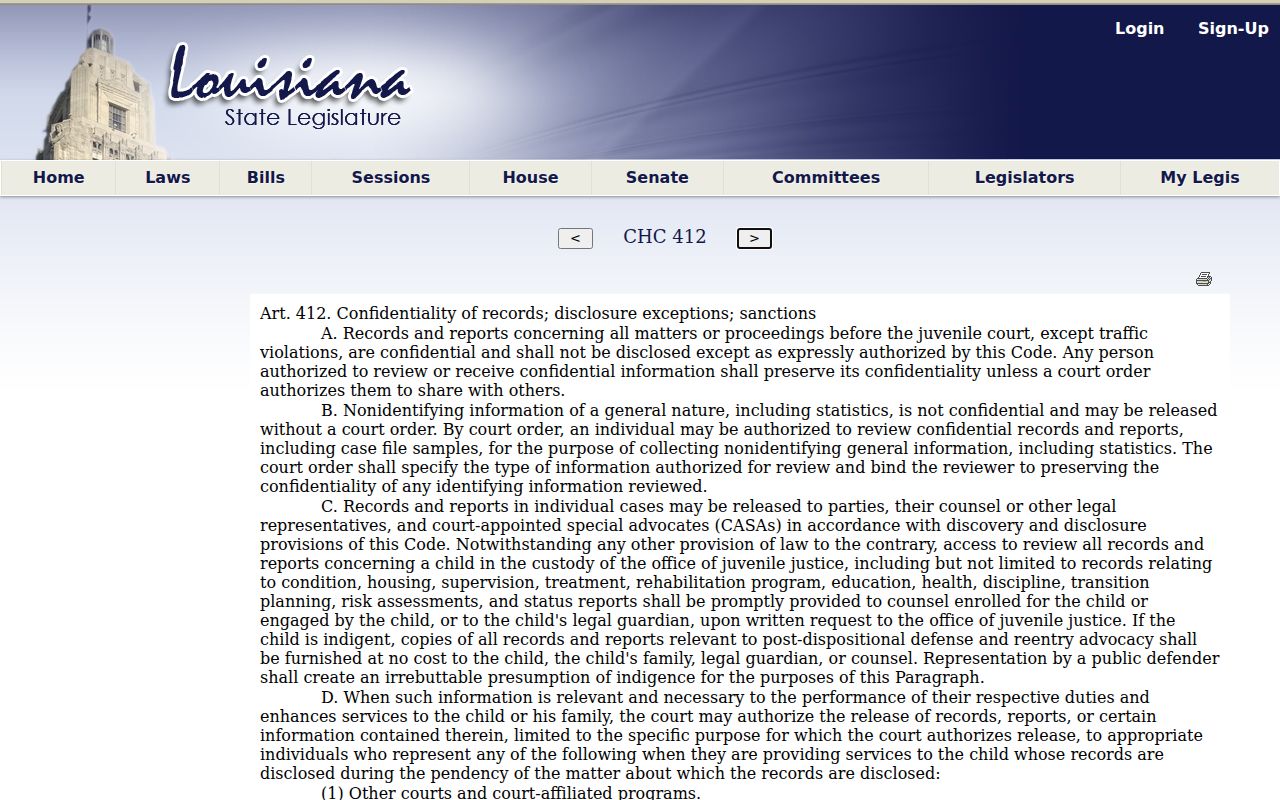
That confidentiality rule answers a common puzzle: a juvenile file may simply not appear through the Avoyelles path that works for adult criminal dockets. The official Children's Code art. 920 covers juvenile expungement.
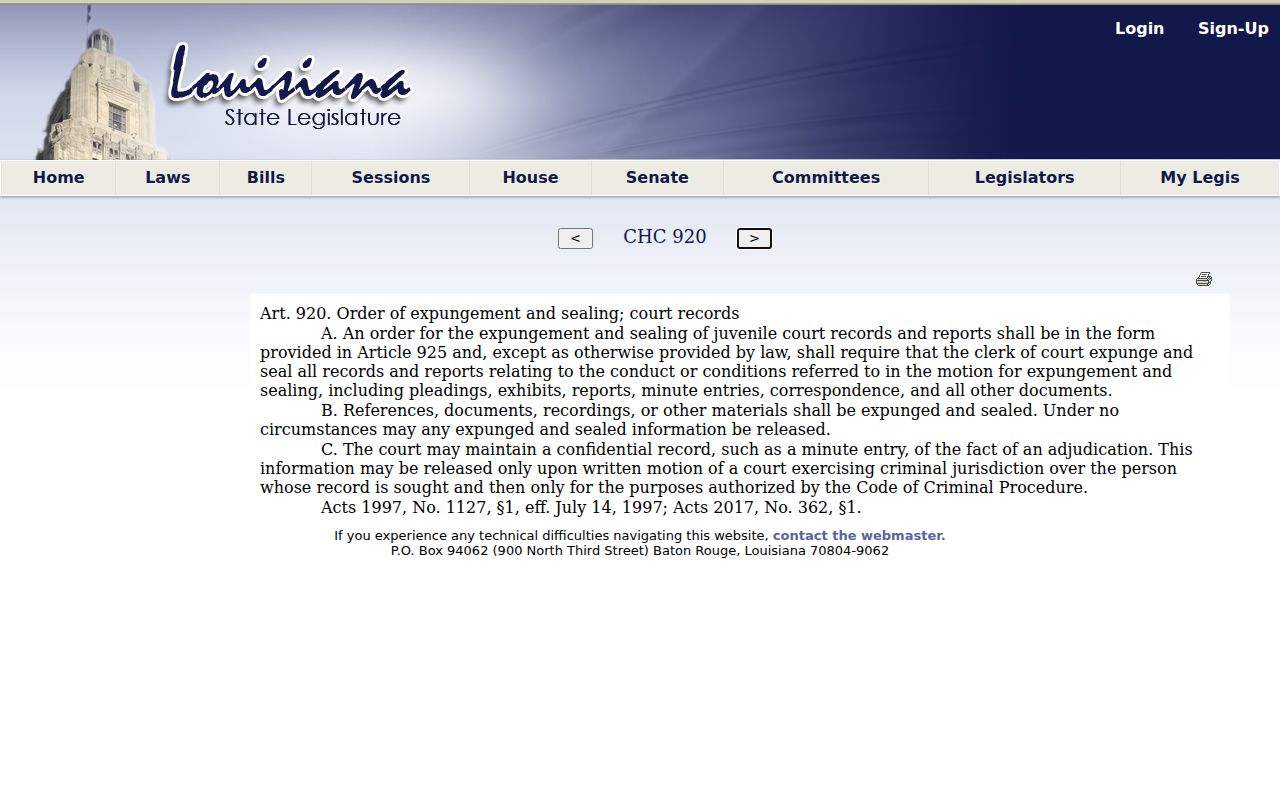
Juvenile expungement adds one more wrinkle. A missing Avoyelles result deserves a check with the proper custodian, not a guess from a portal screen.