
Bunkie Court Docket Searches
Gather the basics first. A Bunkie docket search goes better with the citation number and the filing date. The agency that issued the ticket helps too. For a city-court matter, Bunkie City Court is the place to begin. The court offers no public portal that covers every city case. So a call or written request to the City Court clerk beats trusting a parish search result as a Bunkie record. Some statewide channels ask for accounts. The Avoyelles Parish Clerk's Cott search is account-controlled. LCRAA and eClerks LA are login-based routes for certain records. Neither public landing page promises an unrestricted Bunkie City Court search. A name that returns nothing might mean the wrong court, an access limit, a restricted record, or thin search details. It does not prove a Bunkie case was never filed.
- Read the Bunkie citation or notice for the named court and agency.
- Collect the case or citation number, issue date, and exact name used on the record.
- Contact Bunkie City Court to ask for the local docket or record-access path.
- If the notice names the 12th Judicial District Court, use the Avoyelles parish route instead.
- Confirm every Bunkie court date with the custodian before acting on it.
Bunkie Court Clerk Contact Path
Bunkie counted 3,346 residents in the 2020 Census. That makes it one of Avoyelles Parish's two Census-classified cities. For the city court, the Louisiana City Court Clerks Association roster lists Bunkie City Court Clerk Sandra L. Mose-Thomas at P.O. Box 74, Bunkie, Louisiana 71322, telephone 318-346-7250, fax 318-346-7226, and citycourtofbunkie@gmail.com. Treat that roster as the official contact reference. Confirm officeholder or procedure details before relying on them.
When you write to the clerk, say exactly what you need. It might be a docket status, a setting, an ordinary copy, or a certified copy. Add the citation or case number if you have it. Court-office details change often. So check Bunkie City Court staffing, hours, and jurisdiction with the clerk before you visit. For the contact route, the Louisiana City Court Clerks Association roster is the official listing for the Bunkie clerk.
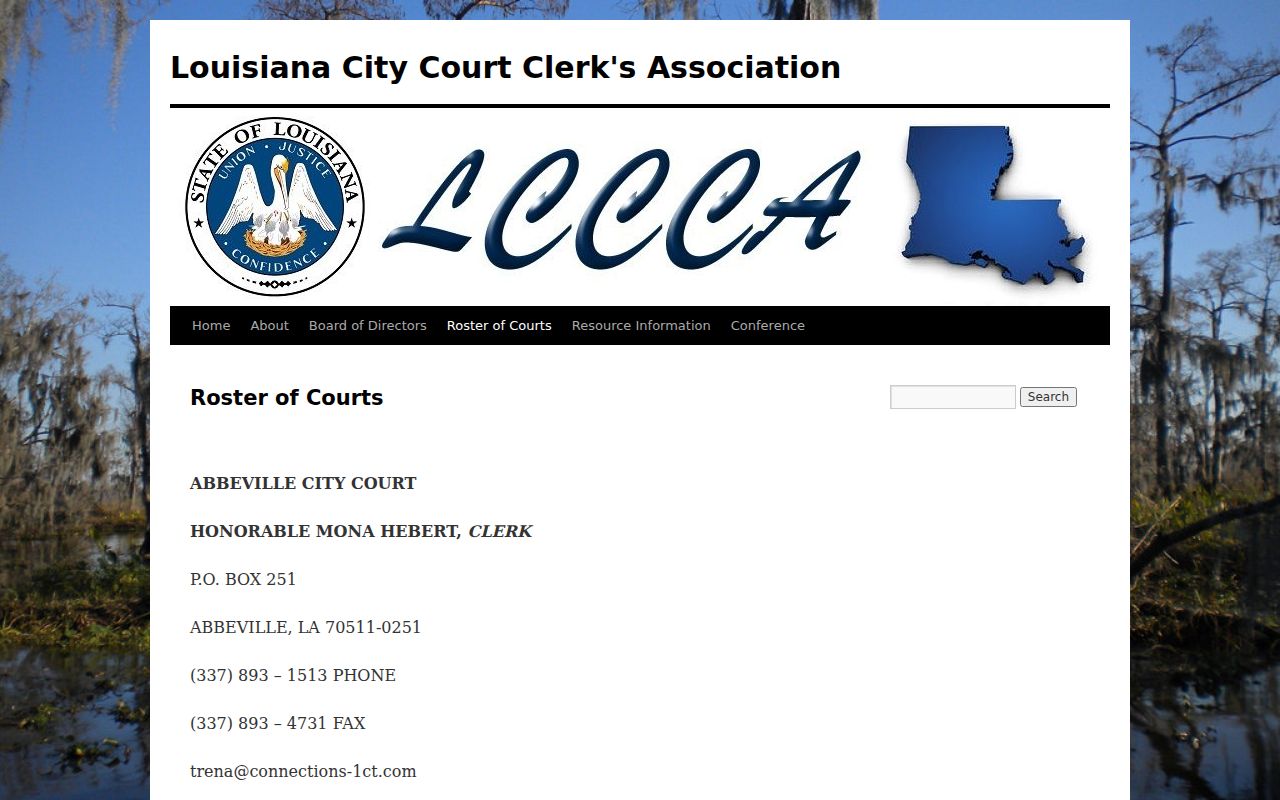
Treat the roster as a contact tool for Bunkie court records, not a live docket search. It also cannot promise that every record you request is public.
Inside the Bunkie Municipal Court
Bunkie City Court is a local city court. It is distinct from the Avoyelles Parish Clerk of Court and from the 12th Judicial District Court. The Louisiana statute recognizing Bunkie City Court sets out its city-court judge and marshal structure. Keep its record path separate from the parish district-court path. That holds even when an event carries a Bunkie address. Assume nothing about online access. Official materials do not show that every setting, image, or citation can be pulled through a public search. That applies to the criminal docket and the civil docket alike. Call or email the Bunkie court clerk first. Ask whether the court can locate the matter, what format the record takes, and what copy or certification procedure applies.
Bunkie City Court or 12th JDC
Where a Bunkie matter lands depends on its type and filing. The Louisiana Judiciary Avoyelles Parish directory names the 12th Judicial District Court as the parish's general-jurisdiction trial court. Parish civil cases and felony charges all sit with a different office than Bunkie City Court. Family matters, probate work, and other district filings belong there too. Let the notice decide the route. A Bunkie City Court citation stays on the city-court contact path. A notice naming the 12th JDC belongs with the parish Clerk and district court. Federal records go through the Western District of Louisiana and PACER, not either local docket. And remember that a town name is a weak search key. The court name and case number matter far more.
Finding Bunkie Court Dates
A Bunkie court date is just a setting on the case record. It can change by court action. So an old citation or a payment receipt is never the last word. Give the clerk the correct Bunkie case or citation number. The office can then confirm the present date and the named location. If the Bunkie matter was filed in the 12th JDC, use the parish court path. Do not use the city court.
Ask for the setting type along with the date. Arraignment, pretrial, compliance review, trial, and docket call each do different work. Never read a final result into an old notice. Silence in an online docket search means nothing either. Get any final Bunkie status or appearance instruction straight from the court that keeps the live record.
| Citation or case number | The first identifier for a Bunkie court record request or date check. |
|---|---|
| Setting date | The date currently shown by the Bunkie court custodian. |
| Time and location | The appearance details confirmed by the court, not assumed from an older notice. |
| Setting type | The event listed for the Bunkie matter, such as arraignment, pretrial, or trial. |
| Current status | The record description supplied by the court, without inferring a disposition. |
Bunkie Court and City Hall Details
The City of Bunkie's official site places City Hall at 105 Walnut Street, Bunkie, Louisiana 71322. The phone is 318-346-7663. Doors stay open weekdays from 8:00 a.m. to 5:00 p.m. That office handles municipal business, though. A court record is a separate matter that belongs with the Bunkie City Court clerk.
Mixing up the two offices is the most common mistake here. Before calling about an ordinance case, a traffic matter, or a city-court docket, confirm which Bunkie office actually keeps the file. If the citation names a different court, follow that court name. Do not assume the Bunkie address decides it.
For general city-government questions, Bunkie's municipal page is the reference to use. Court-record requests go straight to the clerk.

The city's own page helps a visitor get oriented in Bunkie. For any City Court file, the court clerk remains the first contact for records.
Bunkie Traffic Ticket Lookups
Start with the citation itself. It should show the issuing agency, the court, the number, and the instructions. When Bunkie City Court is named, call the city court clerk and give that number. Bunkie publishes no public traffic database that supports a broad name lookup. The clerk is the dependable first step for a city-court citation.
Parish and state tickets are different. They follow the Sheriff and 12th JDC traffic process. A ticket written in Bunkie does not become a Bunkie City Court file on that basis alone. The Avoyelles Parish Traffic Court page explains the parish-level channel. Remember that a payment receipt is not a ruling. Any result without the named court tells you nothing about how the case ended.
When you call, have the agency, court, number, and date in front of you. Those details let the Bunkie clerk or the parish office find the right record path. That way no one has to guess from location alone.
Bunkie Citations Need Court Names
A community name alone rarely tells you who keeps the record. Write down the agency that issued the Bunkie citation. Add the court printed on it, the citation number, the issue date, and the filing date if you know it. With those facts in hand, a caller can separate Bunkie City Court from the 12th JDC, a justice-of-the-peace court, or another system. That beats starting with a generic internet search every time.
The same caution applies to an old Bunkie notice. Court names, addresses, and officeholders change, and yesterday's procedure may not match today's. Ask the current court office to confirm the docket. Also confirm any deadline, the copy path, and payment instructions tied to that specific citation.
How Bunkie Cases Reach the County
Bunkie cases headed for the parish trial court belong to the 12th Judicial District Court and the Avoyelles Parish Clerk of Court, not Bunkie City Court. The district court carries the general-jurisdiction workload. A Bunkie civil dispute, felony, family case, probate matter, or district-court traffic case all run through the 12th JDC record channel identified on the notice.
Docket flow: Bunkie City Court › 12th Judicial District Court › Third Circuit Court of Appeal, if an appeal is filed.
Appellate dockets sit apart from trial records. No appellate case number will reproduce every city or district-court document, so a Bunkie searcher should not expect it to. Begin with the named trial court, and use the Third Circuit path only after an appeal is filed.
Bunkie Court Boundaries Change in 2027
Act 972's official digest and effective-date language redraws the Bunkie City Court territorial framework for cases filed on or after January 1, 2027. It also covers the statutory treatment of wards 7 through 10. The publication date matters here. The 2024 Louisiana court guide is an official snapshot. It does not fix the post-2027 Bunkie boundary or current officeholder details.
For any Bunkie file, the filing date decides which statutory framework applies. An earlier matter stays in the court where it was filed. A future boundary tells you nothing about who holds an existing record. Confirm the court, the filing date, and current procedure with the custodian before relying on a docket. Do the same before sending a request.
Effective-date caution: Bunkie City Court changes in Act 972 apply to cases filed on or after January 1, 2027. A case filed before that date remains in its original court.
Who Can See Bunkie Court Records
Louisiana Public Records Law backs public access to public records. Access, though, is not the same as an open online docket. Send a Bunkie City Court request to the court clerk. Identify the file as precisely as you can. State whether you want the docket, an ordinary copy, a certified copy, or confirmation of a court date. For a parish-level case, the Avoyelles Parish Clerk of Court holds the record.
Some Bunkie court records stay closed. Juvenile files, sealed matters, expunged matters, and information protected by law are not released just because a case is known. Electronic court-record rules also require redaction of personal details. Do not republish confidential information. Never read an unavailable Bunkie record as proof that the case ended one way or another.
Key rules:
La. R.S. 44:1 defines public records for the Louisiana Public Records Law.
La. R.S. 44:31 gives the general right to inspect public records.
La. C.C.P. art. 14.1 governs public availability and redaction of official electronic court records where electronic filing is used.
Bunkie Court Records Need Verification
The Bunkie City Court enabling provision sets out the court's legal footing. A statute answers questions of structure. It cannot tell you who staffs the clerk's office today. For a live docket question in Bunkie, the statute, a court guide, and a roster of officeholders all help. None replaces a call to the court that actually holds the file.
Act 972 also lets city courts pursue electronic payment and virtual-court options down the road. Permission is not a product. Nothing in the act means a Bunkie electronic payment or virtual docket system exists right now. The Bunkie court clerk can name the one approved channel for your case.
The official Bunkie City Court statute remains the reference. It still shows how the local court is built.
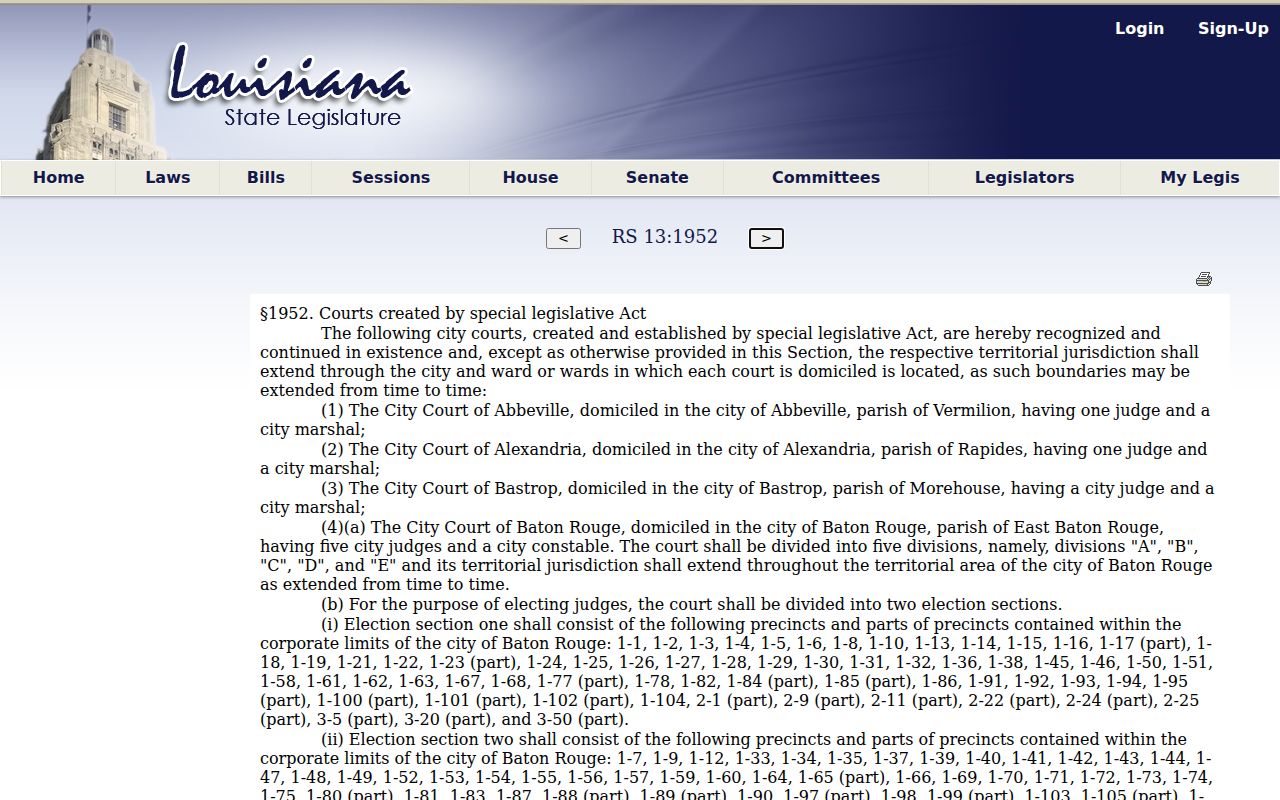
The statute settles the Bunkie court's legal structure. For current court records, confirm access with the office holding the file.